Turntable Buyers Guide: How to Choose the Right Record Player
Choosing the right turntable is crucial for anyone serious about vinyl records, but with so many options and wildly different price points, it can be difficult to choose the right one. Whether you're new to the world of vinyl or looking to upgrade your existing setup, this guide will help you understand what to look for when buying a turntable, ensuring you get the best possible listening experience.

Considerations When Buying a Turntable
1. Budget
Entry-Level Turntables: Typically priced between $100 and $300.
These turntables are perfect for beginners and offer decent sound quality and essential features. In fact in the past few years alone I feel we have seen a massive step up in quality and features found in budget models that they are competitive with higher priced models for the past decade.
Mid-Range Turntables: Priced between $300 and $700.
These models provide better build quality, improved sound, and more features like adjustable tracking force and anti-skate controls. Things have become very refined in this category, and I think it’s the sweet spot for an audiophile looking to buy a record player that will last them the rest of their lives.
High-End Turntables: Priced above $700.
These offer premium sound quality and advanced features and often require more manual setup. These are ideal for prioritizing sound and pairing with expensive audiophile speakers. They will be overkill for many buyers, but if you want the ultimate level of performance as well as some stunning materials and craftsmanship, these are the ones to go for.
2. Drive System
Belt-Drive Turntables:
Preferred for home listening due to their reduced motor noise and vibration. The belt acts as a buffer between the motor and the platter, resulting in better sound quality.
Direct-Drive Turntables:
Favored by DJs and professionals for their durability and quick start/stop times. The motor is directly connected to the platter, providing more consistent speed.
For me, when comparing belt drive and direct drive turntables for home hi-fi systems, the primary considerations are sound quality, vibration isolation, and ease of use. Belt drive turntables excel in providing superior sound quality due to their design, which isolates the motor from the platter using a belt. This separation minimizes motor noise and vibrations that could interfere with audio playback, resulting in a cleaner, more detailed sound.
For many of us, the focus is often on achieving the best possible listening experience, and belt drive turntables are better suited for this purpose. Their design prioritizes audio fidelity instead of being high torque and quick start times offered by direct drive models. I see that as useful in professional DJ environments where durability and speed are essential, but not necessary if you just want to chill out and listen to your records. While there are very good direct drive models, I do have a bias towards belt, but then again, that can be due to a nostalgic love of the process and doing things the classic way.
In a home hi-fi system, where the primary goal is to enjoy music in its most pristine form, a belt drive turntable provides the subtlety and nuance that audiophiles appreciate, making it the superior choice for discerning listeners.
3. Manual vs. Automatic
Manual Turntables:
Require the user to lift the tonearm and place it on the record manually. These turntables often appeal to purists who enjoy the hands-on experience.
Automatic Turntables:
Feature mechanisms that automatically place the tonearm on the record and return it when the side is finished. These are more convenient, especially for beginners.
The primary considerations here are control, user experience, and potential impact on sound quality. Manual tonearms require the user to physically lift and place the needle on the record and lift it off when finished. This hands-on approach gives audiophiles complete control over the playback, allowing for precise placement and minimizing any potential mechanical interference, which can be crucial for maintaining sound quality.
Automatic tonearms handle the needle placement and return automatically. Their biggest advantage is convenience, especially for those new to vinyl. However, the additional mechanisms involved in automatic systems can introduce slight vibrations or mechanical noise, which some audiophiles believe may subtly impact sound quality (although I’m impartial on this point).
A manual tonearm is often considered better for home hi-fi systems, where the focus is on achieving the highest fidelity audio experience. It eliminates potential mechanical interference, allowing for a purer sound.
For me, there is a nonauditory benefit - the manual process enhances my tactile experience of vinyl playback; I cherish the process and the ritual of selecting a disc and placing that needle and tonearm myself. We are, after all, using an acoustic medial and escaping a digital world, its why vinyl is popular again, so why not go back to that slower, more methodical way of listening?
4. Cartridge and Stylus
Integrated vs. Upgradable Cartridges:
Some turntables come with integrated cartridges that cannot be replaced, while others allow for cartridge upgrades. Upgradable options are preferable for those looking to improve sound quality over time.
Stylus Shape:
Elliptical styli offers better tracking and detail retrieval than spherical styli, but they also tend to wear out records faster.
When we compare integrated and replaceable cartridges for home hi-fi systems, the key considerations are sound quality, customization, and long-term value. Integrated cartridges are permanently attached to the tonearm and are typically found on entry-level turntables. They offer simplicity and ease of use, making them ideal for beginners. However, their fixed nature limits the ability to upgrade or customize the sound, which may not satisfy more discerning audiophiles.
As you progress in this hobby, you will learn to love toying with and upgrading different aspects of your hifi system, so why limit yourself in a big way out of the box?
Replaceable cartridges allow users to swap out the cartridge as needed, enabling them to choose different models that better match their sonic preferences or to upgrade as their system evolves. This flexibility makes replaceable cartridges the preferred choice for serious hi-fi enthusiasts and you can experiment with different cartridges to achieve the ideal sound quality.
Stylus shape: Common shapes include spherical (or conical) and elliptical. Spherical styluses are more forgiving and durable but offer less precision in tracking the grooves, which can lead to less detailed sound. Elliptical styluses, with their finer point, track the grooves more accurately, resulting in improved detail and clarity, making them a better choice for high-fidelity audio systems.
In my own setup, I use replaceable cartridges and an elliptical stylus.
5. Built-in Preamp
With Built-in Preamp:
Turntables with a built-in preamp can connect directly to powered speakers or an amplifier without a phono input. This is convenient for beginners or those with limited equipment.
Without Built-in Preamp:
These models require an external phono preamp, offering more flexibility in sound customization and often better sound quality. I wrote this article about the best preamplifiers you can buy right now, so you may want to read this to know what you’re getting into in terms of added complexity and cost.
Turntables with built-in preamps are convenient, as they can be directly connected to powered speakers or amplifiers without a phono input, making them an easy choice for beginners or those looking for a simple setup. However, the quality of built-in preamps can vary, and they limit user control over another aspect of the audio chain.
Turntables without built-in preamps do require an external phono preamp, either as a standalone component or integrated into an amplifier or receiver. This setup allows audiophiles to choose a preamp that best matches their system and sonic preferences, often resulting in better sound quality due to the higher performance of dedicated preamps.
A turntable without a built-in preamp is typically the better option for home hi-fi systems and where people have designed dedicated listening areas where sound quality is the priority. It offers greater flexibility and the potential for superior audio performance by allowing users to select a high-quality external preamp that complements the rest of their audio system.
Top Turntables to Consider in 2024
1. Audio-Technica AT-LP120XUSB

Price: $$ (Mid-range)
Features: Direct-drive, USB output, adjustable tracking force
Why It’s Great:
I like the Audio-Technica AT-LP120XUSB, its one I owned personally, and for the pric,e it overdelivers. It’s versatile and has a solid build, which we expect from Audio-Technica, who are still today one of the biggest players in professional audio equipment.
Its direct-drive, DC-servo motor gives reliable, stable performance, and it supports 33, 45, and 78 RPM speeds. The S-shaped tonearm has adjustable tracking force and anti-skate, offering a good balance of control and durability. I also value the built-in, switchable phono preamp — it lets you plug into almost any system, whether you have a dedicated phono input or not. The USB output is a big plus: you can easily convert your vinyl to digital files. The die-cast aluminum platter is robust and helps reduce vibration, and the detachable headshell with VM95E cartridge gives a flexible upgrade path if you choose to go that route. All in all, it’s a practical, feature-rich turntable that works well for both beginners and more experienced vinyl enthusiasts. It’s going to last forever too, and if anything does go wrong, Audio Technica are usually easy to deal with in sourcing a repair and parts.
2. Pro-Ject Debut Carbon EVO
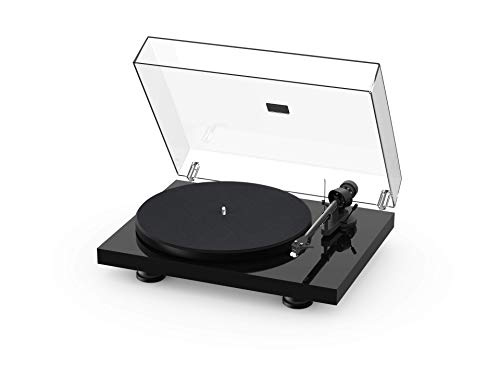
Price: $$$ (Mid-range to High-end)
Features: Belt-drive, carbon fiber tonearm, adjustable anti-skate
Why It’s Great:
The Pro-Ject Debut Carbon EVO has both refined engineering and stellar build quality. The carbon-fiber tonearm feels precise and lightweight, giving a sense of careful craftsmanship. Its sleek, minimalist plinth and high-mass phenolic platter reflect a thoughtful balance between aesthetics and stability, it looks good but that doesn’t come at the expense of performance.
The adjustable feet enhance isolation while the strong, yet compact chassis delivers a refined presence with little to no vibration. Setup is surprisingly user-friendly, with a simple belt-drive system and well-designed subplatter. The included dust cover is smart and functional, and overall it feels like a premium turntable built to last—durable, elegant, and understatedly powerful.
3. Denon DP-300F

Price: $$ (Mid-Range)
Features: Automatic startup, Built in phono equalizer
Why It’s Great:
I like the Denon DP-300F because it blends simplicity with genuinely satisfying performance. Its fully automatic operation makes vinyl accessible without feeling bulky or overengineered.
Press a button, and the tonearm glides into place with a smooth, confident motion. The built-in phono preamp is convenient for modern setups. I also appreciate its solid build and clean, understated design, which feels timeless rather than trendy. It’s a turntable that quietly does everything right, making listening easy, reliable, and consistently enjoyable.
4. Fluance RT85

Price: $$ (Mid-range)
Features: Belt-drive, acrylic platter, Ortofon 2M Blue cartridge
Why It’s Great:
I appreciate the Fluance RT85 for its focus on sound quality and thoughtful engineering. The acrylic platter adds a sense of precision and stability that translates into cleaner playback and richer detail. Its Ortofon cartridge delivers crisp, dynamic sound without feeling harsh, making every record feel lively and engaging. The build is sturdy and refined, with a quiet motor and vibration-resistant design that helps preserve the character of the music. I also like that it offers an easy, no-nonsense setup while still feeling like a serious piece of audio gear. It’s a turntable that rewards careful listening with consistently impressive performance.
5. U-Turn Audio Orbit Plus
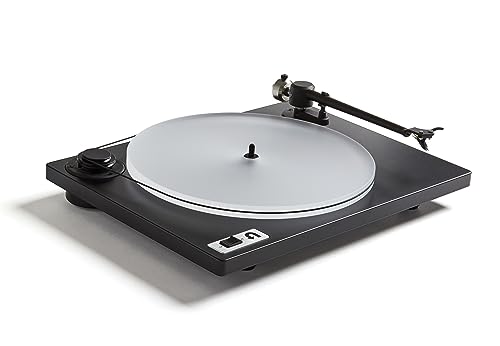
Price: $ (Entry-level to Mid-range)
Features: Belt-drive, acrylic platter, manual operation
Why It’s Great:
The U-Turn Audio Orbit Plus makes my list because of its elegant simplicity and solid craftsmanship. The minimalist design feels timeless yet modern, and the lightweight acrylic platter adds visual clarity without being flashy. Its manual tonearm teaches care and respect, inviting a tactile connection to vinyl. The tonearm’s precision bearings and low-resonance phenolic mat show thoughtful engineering. Assembly is straightforward, and the included dust cover demonstrates attention to both function and form. I also appreciate the value: it delivers a high-quality mechanical experience without the unnecessary extras, making it deeply satisfying to operate. It’s a beautifully balanced minimalist instrument.
Additional Accessories to Consider
Record Cleaning Kit

Keeping your records clean is essential for maintaining sound quality and preventing wear on your stylus. A good cleaning kit can help prolong the life of your vinyl and equipment, make your music sound better and cut down on long term costs of your turntable in the way of replacing worn parts and maintenance fees. I have a separate article about how to clean and maintain your record player so it lasts you a lifetime.
Turntable Mat
A turntable mat is good for enhancing sound quality and protecting your vinyl records. It sits between the record and the platter, providing a stable and non-slip surface that helps minimize vibrations and unwanted resonance. This improves the clarity and accuracy of the audio playback by reducing noise interference.
Additionally, a turntable mat can prevent static build-up, which protects your records from dust and reduces the risk of static shocks that can damage both the vinyl and the turntable’s stylus. Overall, a quality mat enhances the listening experience while extending the lifespan of your records.
Turntable Isolation Base (Optional Luxury)
By no means a necessity provided you are using a sufficiently heavy table or cabinet to mount your record player but all sorts of vibrations can transfer through your record as it plays. People walking, something being dropped. It all has the potential to cause skipping and even in the worst case damage to an LP. The one people don’t even think about is the vibration caused by the music playing through a set of Hifi Speakers can itself cause a record to skip. Isolation tables resolve that issue by dampening and removing vibrations.
By isolating the turntable from these disturbances, the isolation base ensures that the stylus tracks the grooves of the vinyl more accurately, resulting in clearer, more precise sound. This is especially important for audiophiles seeking to preserve the integrity of their music and achieve the highest fidelity possible from their turntable setup.
Conclusion
Choosing the right turntable involves balancing your budget with the features and performance you need. Whether you're just getting into vinyl or looking to upgrade, the options above provide something for everyone, from entry-level to high-end audiophiles. Consider your specific needs, such as the drive system, cartridge, and built-in preamp, to find the perfect turntable for your vinyl collection.